Tuesday, 8 September 2015

VMworld 2015: DataCore Unveils Revolutionary Parallel I/O Software; Proven Designs, "Less is More" Hyperconverged...

VMworld 2015 News Roundup – Slideshow of Top Stories
This week virtualization giant VMware (VMW) held its annual VMworld customer conference in San Francisco, and as always there was no shortage of virtualization-centric news from partner companies. Since reading pages and pages of press releases is no fun for anyone, we decided to compile some of the biggest announcements going on at this year’s show.

DataCore Unveils Parallel I/O Software
Software-defined storae vendor DataCore Software unveiled its new parallel I/O software at VMworld, which was designed to help users eliminate bottlenecks associated with running multi-core processing systems. The company also announced a new worldwide partnership with Curvature to provide users with a procurement and lifecycle model for their storage products, data services and centralized management.
Read more here.


Why Parallel I/O Software and Moore’s Law Enable Virtualization and Software-Defined Data Centers to Achieve Their Potential

VirtualizationReview - Hyperconvergence: Hype and Promise
The field is evolving as lower-cost options start to emerge.
…Plus, the latest innovation from DataCore -- something called Parallel I/O that I'll be writing about in greater detail in my next column -- promises to convert that Curvature gear (or any other hardware platform with which DataCore's SDS is used) into the fastest storage infrastructure  on the planet -- bar none. Whether this new technology from DataCore is used with new gear, used gear, or to build HCI appliances, it rocks. More later.

SiliconAngle: Back to basics: Why we need hardware-agnostic storage | #VMworld
In a world full of hyper this and flash that, George Teixeira, president and CEO of DataCore Software Corp., explained how going back to to the basics will improve enterprise-level storage solutions.
Teixeira and Dustin Fennell, VP and CIO of EPIC Management, LP, sat down with Dave Vellante on theCUBE from the SiliconANGLE Media team at VMworld 2015 to discuss the evolution of architecture and the need to move toward hardware-agnostic storage solutions.

VMworld the Cube: Video Interview on DataCore and Parallel I/O: https://www.youtube.com/watch?t=16&v=wH6Um_wUxZE

IT-Director on VMworld 2015: DataCore Unveils Revolutionary Parallel I/O Software
DataCore shows its hyper-converged 'less is more' architecture

DataCore Launches Proven Design reference Architecture Blueprints for Server Vendors
Lenovo, Dell, Cisco and HP:


Virtualization World: DataCore unveils 'revolutionary' parallel I/O software

More Tweets from the show:

Make any storage or Flash #VVOL compatible with our #Software-defined Storage Stack #SSD #virtualization #VMworld http://www.datacore.com 


Check out our latest pictures from the show and tweets live from VMworld at: https://twitter.com/datacore


#VMworld DataCore Parallel IO Software is the 'Killer App' for #virtualization & #Hyperconverged systems...stop by booth 835 pic.twitter.com/IbcTaTmfpv

Great to see the crowds at #VMworld learning more about DataCore’s Parallel IO, #VSAN, Hyperconverged & Software-defined Storage pic.twitter.com/chCZZ7H4x3

VMworld 2015: DataCore Unveils Revolutionary Parallel I/O Software
New Hyper-Converged Reference Architectures, Real World VMware User Case Studies and Virtual Server Performance Breakthroughs Also on Display


SAN FRANCISCO, CA August 31, 2015 DataCore Software, a leader in Software-Defined Storage, will use the backdrop of VMworld 2015 to show its hyper-converged ‘less is more’ architecture. Most significantly, VMware customers and partners will see first-hand DataCore’s adaptive parallel I/O harnessing today’s multi-core processing systems to eliminate the major bottleneck holding back the IT industry – I/O performance.
"It really is a perfect storm," said DataCore Chairman Ziya Aral. "The combination of ever-denser
multi-core processors with efficient CPU/memory designs and DataCore’s parallel I/O software create a new class of storage servers and hyper-converged systems that change the math of storage performance in our industry...and not by just a little bit. As we publish an ever-wider array of benchmarks and real-world performance results, the real impact of this storm will become clear."

At booth #835, DataCore’s staff of technical consultants will discuss the state-of-the-art techniques used to achieve much greater VM densities needed to respond to the demanding I/O needs of enterprise-class, tier-1 applications. DataCore will highlight performance optimizations for intense data processing and I/O workloads found in mainstream online transaction processing (OLTP) systems, real-time analytics, business intelligence and data warehouses. These breakthroughs have proven most valuable in the mission-critical lines of business applications based on Microsoft SQL Server, SAP and Oracle databases that are at the heart of every major enterprise.

Other announcements and innovations important to VMware customers and partners will also be featured by DataCore at VMworld. These include:
·         Hyper-converged software solutions for enterprise applications and high-end OLTP workloads utilizing DataCore™ Adaptive Parallel I/O software
·         New ‘Proven Design’ reference architectures for Lenovo, Dell, Huawei, Fujitsu and Cisco servers spanning high-end, midrange and smaller configurations
·         A new worldwide partnership with Curvature to provide users a novel procurement and lifecycle model for storage products, data services and centralized management that is cost-disruptive
·         Preview of DataCore’s upcoming VVOL capabilities
·         Stretch cluster capabilities ideal for splitting hyper-converged systems over metro distances

Breakout Sessions
·         DataCore and VMware customer case study featuring Mission Community Hospital: “Virtualizing an Application When the Vendor Says ‘No’” in the Software-Defined Data Center track -- Monday, August 31, 2015 at 12:00 p.m.

·         Lenovo Servers in Hyper-Converged and SAN Storage Roles” Learn how Lenovo servers are being used in place of traditional storage arrays to handle enterprise-class storage requirements in hyper-converged clusters as well as external SANs. Uncover the agility and cost savings you can realize simply by adding DataCore Software to Lenovo systems.  Two theater presentations  -- Tuesday, September 1, and Wednesday, September 2 at 3:30 p.m in the Lenovo Booth #1537
·         “Less is More with Hyper-Converged: When is 2>3” and “Efficiently Scaling Hyper-Converged: How to Avoid Buyers’ Remorse” Daily in the DataCore Booth #835

About VMworld
VMworld 2015 U.S. takes place at San Francisco’s Moscone Center from August 30 through September 3, 2015.  It is the industry's largest virtualization and cloud computing event, with more than 400 unique breakout sessions and labs, and more than 240 sponsors and exhibitors. To learn more about VMworld, please visit: www.vmworld.com 


Tuesday, 1 September 2015

DataCore Selected by CIOReview as one of 20 Most Promising Cisco Solutions Providers

DataCore has been featured in CIOReview: DataCore has been selected as one of the 20 Most Promising Cisco solution Providers.
Read Full Article Here: http://cisco.cioreview.com/vendor/2015/datacore

Data Storage needs are vastly growing, and IT organization are constantly facing challenges with performance. DataCore combined with Cisco UCS platforms creates unique storage capabilities into a system that is designed to increase business agility working to address the needs of the growing market. "DataCore has transformed the Cisco UCS servers into software-defined storage solutions that manage demanding application workloads and support the full spectrum of hyper converged systems, virtual and traditional SANs and data stored in private, hybrid and public Clouds.”

Check out the new DataCore Proven Design Reference Architecture for Cisco UCS


DataCore paired with Cisco UCS servers “…creates multiple solution scenarios, including: External SAN pooling via Cisco VIC Connectivity, Metro Clustering of Existing and New Storage for Business Contiunity and Disaster Recovery and Extreme acceleration for Business Applications." DataCore storage platform works across the entire infrastructure and allows customers to fully utilize their Cisco solutions while also gaining the benefits of high availability and flexibility. 

It is clear that DataCore and Cisco will address the concerns with respect to performance, deployment times and other issues that address Return on Investment in their unified computing approach taking storage to the next level.


Monday, 31 August 2015

DataCore and Curvature- A Better Way to Do IT

Curvature and DataCore Storage

"We believe software-defined storage will be one of the highest-impact trends changing infrastructure and operations through 2018," said Jeff Zanardi, VP of business development, Curvature. "We are excited to build solutions based on DataCore's industry leading IO/s and price performance storage virtualization technologies.  This will change how companies, procure, build and manage their storage infrastructures, which will result in a disruption of the current market, especially among entrenched storage vendors."

DataCore Software has announced a partnership with Curvature LLC, an IT infrastructure and services provider, that will change the economics of storage and the useful life span of storage investments.

DataCore and Curvature Partnership
Techtarget: DataCore Software and Curvature partner
DataCore has partnerships with small players who sell pre-owned equipment but none of the size and scope of Curvature, which posted more than $320 million in revenue last year, operates nine offices in North America, Europe and Asia and has more than 10,000 clients worldwide…
"Curvature is bringing a new pricing model to the enterprise storage market that's more favorable than the pricing models of the current legacy vendors such an EMC or a NetApp," said Roger Cox, research vice president at Gartner Inc. "One of the largest complaints we get from users is the high cost of service and support from these legacy vendors, because as a user, you're fundamentally stuck. Either you pay the piper in terms of more hardware maintenance or you buy a news system."
Cox said software-defined storage options from DataCore and other vendors have the potential to save users 50% to 60% on capital and operating expenses over a five-year time period.
"With Curvature as a partner with DataCore, they can sell the complete system to the user," Cox said. "They can do the service and support, so you've got one throat to choke, one number to call.
Curvature + DataCore
The combination of Curvature and DataCore will help large organizations gain control over the management and cost of their data center storage devices and costs - without sacrificing functionality and performance.  DataCore enables customers to benefit from software agility that helps 'future-proof' and optimize their investments while delivering storage performance acceleration to improve overall application and business productivity. These new combined solutions, now available from Curvature, take advantage of commoditized hardware to build robust storage infrastructure and deliver unique ways to expand the life of existing equipment.
CRN noted in its Exclusive: Curvature Jumps Into Software Defined-Storage With DataCore Partnership that DataCore's software, combined with Curvature's hardware and professional services, will give customers a competitive storage solution at an attractive price point.
Virtualization Review also recently published “Playing the 'Forced Hardware Update' Game”where Dan Kuznetsky detailed a conversation held with Jeff Zanardi of Curvature and both George Teixeira and Steve Houck of DataCore, where they spoke about how enterprises often find themselves being pushed to upgrade systems, networking and storage equipment, even though those devices are still working just fine. Since the design lifecycle for equipment is often five to seven years, buying new equipment every three to four years seems silly.  Enterprises take this step because they want to know that support will be available when something goes wrong.
 
Industry analyst firm Gartner also predicts that, "By the end of 2017, more than 25% of Global 2000 enterprises' IT organizations will try to base their own storage systems on an SDS approach, which will be a major increase from today's 10%." (Gartner Research, How to Determine Whether Software-Defined Storage Is Right for Your Organization, by Julia Palmer)
The Curvature and DataCore partnership will provide customers with control over the design, build and operation of their storage platforms. As a result, organizations will be able to transform existing and pre-owned equipment into a longer-lasting, more agile custom-defined platform that operates independently from manufacturer-installed software. 
 
Organizations can repurpose their existing server and storage equipment by adding DataCore's unified software services alongside Curvature's hardware and third-party maintenance platform.
Thousands of businesses globally rely on Curvature to keep critical assets working beyond the original manufacturer's specifications, which reduces TCO and increases business agility.
 
"We admire Curvature's focus on ensuring customers control the investments in equipment they already paid for in addition to providing them with new alternatives on how to lower  OPEX and CAPEX purchasing costs for new gear, creating efficiencies and savings across the IT spectrum," said Steve Houck, COO, DataCore. "Our partnership combines our software solutions, world-class maintenance and cost-effective hardware alternatives to allow customers to keep current storage equipment functioning long beyond expectations."
 
Delivering faster performance and  automatic management of a customer's storage technology, DataCore's SDS solutions enable companies to reduce the risks associated with constant change and avoid capital expenses by eliminating the need to 'rip and replace' storage equipment already in place. Purchasers pay once for intelligent software and run it on the hardware of their choice, buying what they need, when they need it.
To Learn more: Contact Curvature or call +1 800 230 6638
ABOUT CURVATURE
Curvature
 is transforming how companies procure, maintain and upgrade equipment and support for multi-vendor network and data center environments. Founded in 1986, the company, formerly known as Network Hardware Resale, has become a trusted strategic partner for more than 10,000 organizations globally, including some of the largest telecommunications carriers, top financial services firms and Global 1000 organizations. Based in Santa Barbara, Calif., the company specializes in delivering 24X7 global technical support, advanced hardware replacement, and complete lifecycle management of networking and data center equipment from corporate locations in the Americas, Europe and Asia. For more information, visit www.curvature.com

Monday, 27 July 2015

CIO: Growth in Software-Defined Storage Drives DataCore Expansion in Australia

From: http://www.cio.com.au/25219/growth-in-software-defined-storage-drives/ 

DataCore, a leader in Software-Defined Storage and hyper-converged virtual SAN solutions, today announced an increase in sales and further expansion of their Australian operations to support the recent and rapid business demand for DataCore solutions within ANZ.

DataCore storage virtualization and hyper-converged virtual SAN solutions empower organisations to seamlessly manage, protect and scale their data storage. These technologies enhance and work with the data storage products already in use within most organisations, and are able to deliver massive performance gains, higher availability and new levels of flexibility at a fraction of the cost of solutions offered by legacy storage hardware vendors.

Marco Marinelli has been added to the team and has been appointed as a Regional Sales Director for Australia and New Zealand, based in DataCore’s Melbourne office. Marco has 30 years of technology industry experience, with recent senior positions at Dell and HP.

Australia is now the headquarters for DataCore’s expansion into the Asia Pacific Region, with Jamie Humphrey recently announced as VP of Asia Pacific and Japan Sales in May 2015, and Orla Hanby appointed as Marketing Manager. This expansion has coincided with an expansion of DataCore’s partner program, to support increased end user demand for software defined storage solutions.

Mr. Humphrey commented, “With more than 1,000 customer sites already up and running within the Asia Pacific region, we are continuing to rapidly grow our presence within Australia and New Zealand, with offices in Sydney and Melbourne.”

“Our solution is a no-brainer for any channel partner that is looking to offer their clients a quick win for storage scalability and performance. It works perfectly with the hardware brands that their clients already have, supports ultra-high availability designs, and banishes hardware vendor lock-in. As a result, we have seen a 50% increase year-on-year sales revenue in this territory.”

Technology alliances with Dell, Cisco, Fujitsu, Huawei, and Lenovo have also been added to a long list of vendor partnerships. This gives Australian solution providers and systems integrators a simple way to transform, for instance, Dell or Cisco infrastructure by pairing it with DataCore software and backend storage to form comprehensive, flexible, software-defined platforms that serve as the cornerstone of the next-generation, software-defined data center.

Distributed in Australia by Avnet and Westcon, DataCore solutions are available and deployed via accredited systems integration partners.

Mr. Humphrey continued, “We provide a wide range of marketing, sales and technical support to our Australian channel partners. Our ‘Hyper-converged Virtual SAN Seed Promotion’ and new programs have been extremely effective in developing new partner relationships and driving new sales opportunities for our partners, while helping us to expand our partner base in Australia.”

DataCore storage virtualization solutions serve as the architecture for uniting storage infrastructures – reducing total cost of ownership (TCO) and increasing business agility. The marketing program and especially the new seed promotion enables a new DataCore partner to get a fast and easy win for their first DataCore customer account – quickly demonstrating to the client the performance improvements, savings, and high availability that they can achieve by deploying DataCore across their entire storage infrastructure.

Friday, 24 July 2015

Software defined storage demand drives DataCore to new highs

DataCore says it has more than 1000 customer sites in Asia Pacific.


DataCore says increasing demand for software defined storage has bolstered its local sales by 50% year on year and lead to expansion of its ANZ operations.

The software defined storage and hyper converged virtual SAN vendor says it’s seeing ‘recent and rapid business demand’ for its solutions within Australia and New Zealand.

That demand has led to the appointment of Marco Marinelli as regional sales director for Australia and New Zealand. Marinelli, who has 30 years of technology industry experience, with recent senior positions at Dell and HP.

DataCore’s offerings are distributed in Australia by Avnet and Multimedia Technology, with Westcon Group New Zealand the Kiwi distributor.

Jamie Humphrey, who was recently appointed as DataCore’s Asia Pacific and Japan vice president,  says the company provides a wide range of marketing, sales and technical support to its partners, and new programs have been ‘extremely effective’ in developing new partner relationships and driving new sales opportunities for partners.

“Our solution is a no-brainer for any channel partner who is looking to offer their clients a quick win for storage scalability and performance,” Humphrey claims.
“It works perfectly with the hardware brands that their clients already have, supports ultra-high availability designs and banishes hardware vendor lock-in.
“As a result, we have seen a 50% increase year on year in sales revenues in this territory,” Humphrey says.

He says new technology alliances with Dell, Cisco, Fujitsu, Huawei and Lenovo are giving solution providers and system integrators ‘a simple way to transform, for instance, Dell or Cisco infrastructure, by pairing it with DataCore software and backend storage to form comprehensive, flexible, software-defined platforms that serve as the cornerstone of the next-generation, software-defined data centre’.

Datacore has now made Australia its headquarters for its Asia Pacific expansion.
The company has also appointed a marketing manager, in Orla Hanby.
“This expansion has coincided with an expansion of DataCore’s partner program to support increased end-user demand for software defined storage solutions,” the company says.

http://channellife.com.au/story/software-defined-storage-demand-drives-datacore-new-highs/ 

Monday, 13 July 2015

QNAP Series of Turbo NAS Solutions Certified ‘DataCore Ready’ for SANsymphony-V

“It is a great pleasure to announce today, the DataCore Ready certification is available for our high-end enterprise storage solutions,” said Jerome Jaussaud, product manager of QNAP. “Now, our customers are able to benefit from all the added value provided by DataCore SANsymphony-V and combine it with their existing or newly-purchased QNAP Turbo NAS systems.”
Being certified by the DataCore Ready Program, QNAP NAS is compliant with DataCore SANsymphony-V software-defined storage infrastructures, and can help organizations maximize the availability and utilization of IT assets and centralize the management of data storage.


For more information, please visit https://www.qnap.com/solution/DataCore-Ready/en/index.php.
The QNAP® enterprise-class TVS-ECx80, TS-ECx80, TS-x79U-SAS and SS-x79U-SAS series of Turbo NAS systems are all certified DataCore Ready for SANsymphony-V™.

Easy deployment


QNAP NAS can be easily deployed to ensure storage availability for an organization's production servers and VDI environment.

This solution deployment scenario contains 3 main components:
  • Servers in need of storage and high performance, such as virtualization servers, mail servers and/or databases;
  • The base hardware storage with RAID protection and 10GbE capability provided by QNAP;
  • DataCore SANsymphony-V that provides virtual storage volumes to the servers plus high availability.
QNAP NAS provides the raw hardware storage to DataCore SANsymphony-V via iSCSI. Organizations can effortlessly use this joint solution to achieve desired performance levels and functions for file backup/archiving and disaster recovery.


“The DataCore Ready designation acknowledges the completion of a rigorous compatibility testing process for solutions that are verified to enhance DataCore software-defined storage infrastructures,” said Phil Williams, VP of Business Development & Strategic Alliances of DataCore. “The combination of DataCore and QNAP provides a very flexible solution to maximize IT infrastructure performance to meet the increasing -- and constantly changing -- storage needs in today’s enterprise environments.”
Being DataCore Ready, QNAP NAS ensures joint solution compatibility that allows organizations to leverage many of the cutting-edge QNAP features to optimize their software-defined storage infrastructure, including 10GbE capability, SSD cache, capacity scalability, the QTS operating system for smart and easy storage management, and a lot more. Coupled with the business-ready features of DataCore SANsymphony-V, organizations can effortlessly use this joint solution to achieve desired storage performance levels, high availability, disaster recovery, and a cost-effective software-defined storage based on virtualization technologies
For more information, please visit https://www.qnap.com/solution/DataCore-Ready/en/index.php.

About QNAP Systems, Inc.
QNAP Systems, Inc., as its brand promise "Quality Network Appliance Provider", aims to deliver comprehensive offerings of cutting edge network attached storage (NAS) and network video recorder (NVR) solutions featured with ease-of-use, robust operation, large storage capacity, and trustworthy reliability. QNAP integrates technologies and designs to bring forth quality products that effectively improve business efficiency on file sharing, virtualization applications, storage management and surveillance in the business environments, as well as enrich entertainment life for home users with the offering of a fun multimedia center experience. Headquartered in Taipei, QNAP delivers its solutions to the global market with nonstop innovation. More information is at www.qnap.com.

Tuesday, 7 July 2015

Enterprise Management Associates Selects SANsymphony™-V as the Best Enterprise Solution for Software-Defined Storage

DataCore, a leader in Software-Defined Storage, has announced that its SANsymphony™-V storage virtualization and data services platform has been named by Enterprise Management Associates (EMA), a leading industry analyst and consulting firm, as the “Best Enterprise Solution for Software-Defined Storage” in the newly-released EMA Radar™ Report for Enterprise Software-Defined Storage.
EMA Radar™ Reports provide an in-depth analysis of industry-leading vendors and products, including their overall market position in comparison with other vendors. The EMA Radar Report for Enterprise Software-Defined Storage solutions evaluates the core capabilities and features to abstract and pool storage infrastructure throughout the entire enterprise, including server attached, network based, commodity, and cloud storage.
“There has been a lack of a consistent definition of what software-defined storage is in the industry. This ambiguity has led to a collection of software products that have a great deal of diversity in the value and capabilities provided,” said Jim Miller, senior analyst at Enterprise Management Associates. “DataCore is rated highest in product strength for reaching the ideal of software-defined storage: abstracting all storage regardless where it is located and providing the richest set of services that are completely independent of the storage hardware -- largely automated. The overall functionality places DataCore as the leader in product strength for the Software-Defined Storage radar report. ”
DataCore SANsymphony-V software-defined storage platform works infrastructure-wide across all types of storage (flash, disk and cloud) to automate and optimize performance and resource allocation. It has the ability to abstract existing network-based storage, and also create hyper-converged virtual SANs with server-attached storage and flash/SSDs that can also be integrated with existing storage infrastructures. DataCore’s powerful enterprise-wide services include caching, universal deduplication, compression, random write acceleration, synchronous mirroring, ‘zero-touch’ recovery, thin provisioning, QoS, auto-tiering, replication, performance monitoring, continuous data protection and data migration. 
DataCore SANsymphony-V was also named a category value leader in the 2015 EMA Radar Report for Enterprise Software-Defined Storage. The report states: “DataCore is one of the most cost effective software-defined storage solutions in this report. Customers can acquire a DataCore license for a fraction of the price of competing solutions.”
In addition to being named the Best Enterprise Solution for Software-Defined Storage and value leader, DataCore has achieved ongoing industry recognition, including several announced worldwide partnerships for hyper-converged solutions based on SANsymphony™-V and DataCore™ Hyper-Converged Virtual SAN. Amongst these are industry leaders including HuaweiCisco ,Fujitsu and Dell.

Saturday, 27 June 2015

DataCore wins Storage Virtualization Product of the Year at 2015 Storage Awards

DataCore's SANsymphony™-V has won the Storage Virtualization Product of the Year at the 2015 UK Storage Awards held last week in Central London. The Awards, known as ‘The Storries,’ are held annually to recognize solutions, organizations and personalities, and reward excellence across the Storage Industry. The awards are voted independently online by 11,000 readers of Storage Magazine.
Brett Denly, Sales Director, DataCore UK commented: “Achieving Storage Virtualization Product of the Year was our ultimate goal in attending the Awards. Our Software-Defined Solution, SANsymphony™-V is now a 10th-generation storage virtualization platform, backed and refined with over 17 years of development and with 25,000+ licenses deployed. So, this is a great accolade to receive in recognition of that legacy and the strength of product that we have today, and I would like to thank all those users who took the time to vote for us.”
In addition to becoming the reader’s choice within the Storage Virtualization Product of the Year for 2015, DataCore was voted runner-up in the Product of the Year category and has achieved ongoing industry recognition throughout the year with worldwide partnerships announced for converged and hyper-converged solutions based on SANsymphony™-V and DataCore™ Virtual SAN. Amongst these are industry leaders like Cisco, Dell, Fujitsu, Huawei and Lenovo.
Storage Virtualization Award
DataCore’s Brett Denly, Amanda Bedborough, Emily Darling and Sharon Munday receive the 2015 Storage Virtualization Product of the Year Storage Award.

Wednesday, 27 May 2015

DataCore SANsymphony-V10 adds New Hyper-Converged Services Plus OpenStack Cloud Support

See complete article in the StorageNewsletter

Manage end-to-end I/O performance, optimize flash, integrate backups, improve space efficiency, provision virtual desktops, and automate hyperconverged and enterprise-wide SDSe deployment

DataCore Software Corporation announced the availability of a number of capabilities included within its all-embracing 'any hypervisor, any storage' SANsymphony-V10 storage services platform and its Virtual SAN release.


DATACORE_ssv-box-largeThe PSP2 update release adds support for OpenStack Cinder, enabling DataCore to deliver its comprehensive set of Software-Defined Storage services to private, hybrid and public clouds built with OpenStack. The release includes features and services to centrally control and manage end-to-end I/O performance, optimize flash, integrate backups, improve space efficiency, serve virtual desktops, and automate hyper-converged and enterprise-wide SDS deployments.


A number of services have been incorporated to enable industry-standard x86 servers to gain the essential enterprise storage functionality needed to meet today's demanding business requirements. DataCore's ability to deliver complete and unified range of hyper-converged, virtual SAN and SDS platform services has fueled a list of alliances and server vendor partnerships with companies seeking to leverage their hardware platforms with company's latest release. The PSP2 release is available and shipping.

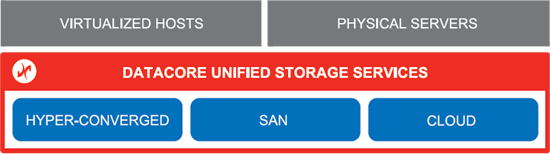
DATACORE_sansymphony-v-storage-functions

Extends powerful enterprise-wide services: The all-embracing software-defined storage platform

Services and enhanced features include:
  • Brings SDS to cloud architectures; adds OpenStack support: Enterprises and cloud service providers can use a SDS platform to centralize the provisioning and management of new or existing storage resources via standard OpenStack Cinder commands. Previously, organizations tasked with creating a cloud infrastructure with OpenStack were challenged to utilize already available storage investments or find new cost-effective storage that was OpenStack-compatible and yet able to deliver enterprise capabilities to power their cloud environments.
  • Hyperconverged virtual desktop services: This release introduces  VDI services and deployment tools to automate the creation and management of stateful, highly-available virtual desktops. The resulting high-density VDI implementations are cost-effective and especially well-suited for organizations seeking to deploy desktops at a departmental level. The software utilizes company's caching and thin provisioning to diminish the dependency on physical storage. In comparison to other hyperconverged VDI offerings, DataCore does not require expensive flash or disk subsystems to achieve needed performance levels; it optimizes industry-standard servers and DRAM, plus uses fewer, lower-priced internal disks in place of higher-priced external storage, to lower the overall cost per virtual desktop.
  • Universal virtual disk deduplication and compression services: Virtual disks can be deduplicated, compressed and scheduled in the background to reduce the space they occupy on disk. Unlike other vendors that limit this type of functionality to their own proprietary or array-specific storage devices, DataCore's space-saving services apply universally across the infrastructure; it extends block-level deduplication and compression to any storage and any file system or hypervisor.
  • Backup integration services, added Veeam support and automation: DataCore works with third-party backup products to simplify end-to-end data protection and ensure rapid data recovery at a granular level. DataCore already supports products such as CommVault Simpana's IntelliSnap technology and Microsoft Data Protection Manager, which take advantage of DataCore online snapshots to centralize backups for a wide range of applications, hypervisors, OSs and storage devices. This update provides a similar capability to trigger Veeam backups to usecompany's highly efficient snapshots to relieve the burden of using VM snapshots on hosts. Backups can be scheduled and taken more frequently with minimal impact on applications, improving RPOs and resulting in productivity and speedier recovery.
  • Console services and centralized management for distributed groups: Organizations with virtual storage pools distributed across multiple locations can manage the different DataCore server groups from a single user interface. Separate levels of control can be assigned to different administrators across a hierarchy of server groups making it possible to centrally manage, control and delegate responsibilites over widely distributed storage infastructures with fewer people.
  • Hyperconverged and popular-use case deployment services: With this update, DataCore continues to simplify and automate how software can be installed, configured and updated to meet different use cases and deployment scenarios. This release makes it easy to set up hyper-converged environments, scalable file systems over clusters, VDI configurations, mixed file/block storage and multi-node HA deployments running the software on either physical or on virtual platforms (Vms).
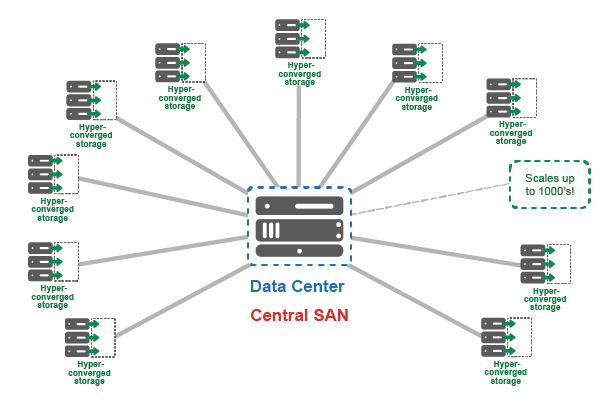
DATACORE_virtual-san-use-case-2
Delivers centralized and powerful SDS platform
to manage overall I/O performance end-to-end 


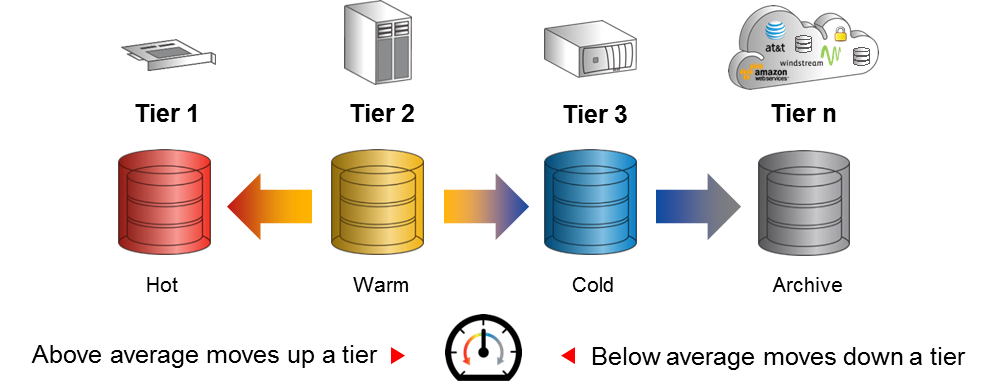
SANsymphony-V10 works infrastructure-wide across all types of storage (flash, disk and cloud) to automate and optimize performance and resource allocation. The release offers a set of tools to profile, monitor, instrument, identify 'hot spots' and manage performance-impacting application workloads. 


DATACORE_auto-tieringDE58A6D8B478


New performance-enhancing additions included in PSP2 are:
  • Performance optimizations for flash: Enhancements have been introduced that impact how DataCore cache performs read operations from flash-based and solid-state storage technologies. The net result is faster application response, lower overhead and better utilization of costly flash memory.
  • Expanded instrumentation and metrics: The PSP2 release provides greater visibility to the I/O behavior of virtual and physical disks so users can accurately understand what is happening with storage resources. Updates include additional performance metrics for virtual disks, improved heat maps and performance trending analysis reports, and added support for S.M.A.R.T. alerts from physical storage to help IT administrators better isolate performance and disk problems. This capabilities improve productivity and make it easier to manage larger-scale deployments while reducing the time and expense to troubleshoot root causes of application slowdowns.
  • Production-ready Random Write Accelerator (RWA): The previous update introduced this innovation for experimental use under certain conditions; the experimental designation is removed in PSP2. This powerful capability converts high-latency random writes into storage-friendly sequential writes, yielding up to 30 times faster performance for the random-write-heavy workloads that frequently updates databases, ERP and OLTP systems. The result is SSD-like speed from lower-cost spinning disks and a reduction in the need for costly flash resources. This capability also helps optimize flash storage performance.
Closing the server to storage Gap; empowering server vendors to meet enterprise demandsThe gap between servers and storage continues to erode as servers become more powerful and more storage capable. In this new era of commoditized hardware, what matters is the software. DataCore recognized this inevitable shift and pioneered the movement to Software-Defined Storage solutions. With this release, the company advances its platform to deliver complete and proven SDS services stack. The software is comprehensive in scope, providing end-to-end data and storage services that are not limited to a single device, but work across different vendors and types of storage from flash to disk to cloud storage. The release combines a set of enterprise storage services with an enduring software architecture designed to harness the continually improving cost curves and technology advances of the underlying hardware to close the gap. Numerous partnerships signed with global server vendors attest to this new trend of server vendors seeking to benefit by providing DataCore SDS with their platforms, including Huawei, Cisco, Fujitsu and Dell.

"As the leading innovator of SDS technology for more than 17 years, DataCore has seen countless storage devices come and go that are all managed and administered differently. We created DataCore SDS solutions to break down those walls and create an enduring and flexible platform to allow any vendor's storage technology to work together seamlessly," said George Teixeira, CEO, DataCore. "We continue to evolve our SANsymphony-V and Virtual SAN solutions to enable our customers to take full advantage of their existing investments and to prepare them for the long term with a software architecture that is designed to absorb new technologies without disruption as the industry advances."

Thursday, 14 May 2015

ARNnet: DataCore appoints former Dell exec to lead APAC expansion, new VP Jamie Humphrey to be based in Australia

"The timing is right to seize the huge market opportunity around software-defined storage and hyper-converged solutions," states Jamie Humphrey, new VP APAC Sales for DataCore Software.“The movement to a software-defined storage strategy is inevitable.
http://www.arnnet.com.au/article/574870/datacore-appoints-former-dell-exec-lead-apac-expansion/
Software defined storage vendor DataCore Software has appointed former Dell executive, Jamie Humphrey, as vice-president of the company’s Asia Pacific region.
Humphrey, who will be based in Australia will drive the DataCore Software brand and go-to-market sales strategy in APAC.
He will be responsible for enterprise sales, creating a skilled network of value-added resellers and driving the continued infrastructure investment and ongoing management of resources throughout the region.
The hire is part of DataCore’s plan to grow investment and increase its market footprint in the Pacific Rim.
Humphrey comes to DataCore Software from Dell, where he held the position of director and general manager of the company’s storage and data management business.
During his 10 years at Dell, Humphrey led the business through a number of restructures, including the amalgamation of the technical and sales teams to provide a highly synergised and effective business organisation, according to a company statement.
DataCore senior vice president of worldwide field operation, Carlos Carreras, said Humphrey had been instrumental in developing key enterprise customer accounts and a network of value-added channel partners to significantly increase Dell’s sales revenues.
“We are confident that he is the right point person for new customer acquisition in APAC and for aligning our resources to best meet the increasing market demand for software-defined storage throughout the region,” he said.
Humphrey said he joined DataCore because the company had the right vision.
"The timing is right to seize the huge market opportunity around software-defined storage and hyper-converged solutions," he said.“The movement to a software-defined storage strategy is inevitable.
"It enables any enterprise to overcome real-life storage management issues, improve the productivity of their existing storage investments and gain the needed flexibility to meet growth and IT demands as they arise.
"Proven strategic leadership is what is needed to capitalise on this market opportunity in the Asia Pacific region."
More than 10, 000 customer sites around the world already rely on DataCore solutions, with just under 1000 located within the APAC region.
The company intends to expand its team by 20 per cent over the next 12 months.
Carreras said that DataCore was set to invest heavily in the Australian channel with projected company growth of over 40 per cent in 2015.
Recently, DataCore and Chinese ICT solutions provider Huawei announced a partnership, which will see DataCore’s SANsymphony-V10 software and Huawei’s FusionServer integrated in a new line of certified hyper-converged solutions.
The collaboration is DataCore’s second hyper-converged deal in recent months, following an agreement with Fujitsu.
Technology and solution alliances with these vendors, and long-standing partners such as Dell and Cisco, are examples of constituents in the DataCore ecosystem on which the users in APAC can rely...

Wednesday, 13 May 2015

Now Available from DataCore: The Fifth Annual State of Software-Defined Storage Survey

“Two major surprises jump out at you from the findings,” said Deni Connor, founding analyst, SSG-NOW. “The absence of near term spending on Big Data and Object Storage among the majority of respondents, and the relatively small penetration of flash across these 477 organizations. Not surprising are the rising levels of investments on Software-Defined Storage initiatitives known to offer more immediate payoff.”

DataCore’s Fifth Annual State of Software-Defined Storage (SDS) Survey Reveals Surprising Lack of Spending on Big Data, Object Storage and OpenStack
In contrast, more than half of organizations polled (52 percent) look to extend the life of existing storage assets and future-proof their IT infrastructure with SDS in 2015

DataCore has released the results of its fifth annual State of Software-Defined Storage (SDS) survey. The 2015 poll explored the impact of SDS on organizations across the globe, and distills the experiences of 477 IT professionals currently using or evaluating SDS to solve critical data storage challenges. The results yield surprising insights from a cross-section of industries over a wide range of workloads.
The survey also probed for levels of spending on much-hyped topics, including Big Data, Object Storage and OpenStack. Unexpectedly, the findings showed that very little funding is being earmarked in 2015 for these initiatives. Some of the pause may be explained by a number of disillusionments that were disclosed in the findings.
 
On the other hand, this year’s report reveals several major business drivers for implementing Software-Defined Storage. 52 percent of respondents expect SDS will extend the life of existing storage assets and future-proof their storage infrastructure, enabling them to easily absorb new technologies. Close to half of respondents look to SDS to avoid hardware lock-in from storage manufacturers, while lowering hardware costs by allowing them to shop among several competing suppliers. Operationally, they see SDS simplifying management of different classes of storage by automating frequent or complex operations. This is notable in comparison with earlier surveys, as these results portray a sharp increase in the recognition of the economic benefits generated by SDS (reduced CAPEX), complementing the OPEX savings referenced in prior years.

Other surprises include: while flash technology penetration expanded it is still absent in 28 percent of the cases and 16 percent reported that it did not meet application acceleration expectations. Also interesting is that 21 percent reported that highly touted hyper-converged systems did not perform as required or did not integrate well within their infrastructure. On the other hand, Software-Defined Storage and storage virtualization are deemed very urgent now, with 72 percent of organizations making important investments in these technologies throughout 2015. 81 percent also expect similar levels of spending on Software-Defined Storage technologies that will be incorporated within server SANs / virtual SANs and converged storage solutions.

Additional highlights of DataCore’s 2015 State of Software-Defined Storage survey include:
  • The ability to add storage capacity without business disruption is identified as the primary reason for choosing storage virtualization software (52 percent of respondents). Supporting synchronous mirroring and metro clusters for high availability to ensure business continuity and asynchronous data replication for remote site disaster recovery are also high on the list.
     
  • More than half of the respondents (53 percent) say that they currently have less than 10 percent of capacity assigned to flash storage. The number of participants who answered that flash makes up higher than 40 percent of their storage capacity is only 9 percent.
     
  • More than 60 percent of respondents experienced performance degradation or the inability to meet performance after virtualizing server workloads. When asked what the typical causes of performance problems are, 61 percent of participants blame slow applications, and 46 percent single out legacy storage devices as the culprit.
     
  • Human errors are driving the need for greater automation. It has become increasingly clear that the complexity which accompanies data growth and diversity is taking a big toll, as 61 percent of respondents indicated that human error was behind application and data center outages.
Software-Defined Storage Technology: Moving the Industry Forward
“This survey sheds new light on how IT professionals approach storage-related innovations. The data reveals that many organizations are moving away from storage functions tied to specific hardware and are deriving real CAPEX and OPEX savings and additional purchasing power by not being locked to particular hardware or being forced to go ‘all new buys’ to modernize their storage infrastructure. It also points out that heavily promoted technologies, such as Object Storage, are more often found at the fringes in pilot programs, where IT is hoping to assess their value,” said George Teixeira, president and CEO at DataCore. “Software-Defined Storage and storage virtualization software, in contrast, are providing the features that the market is demanding right now, such as continuous availability, faster performance and higher efficiency. These concrete benefits carry far more weight in 2015 spending than future promises from yet to be proven technologies and startups.”

The respondents of DataCore’s State of Software-Defined Storage survey come from a diverse set of organizations, both in size and industry, providing statistically significant insights into the similarity in needs for SDS over a wide range of IT environments. Participants were located in North America, South America, Europe and Asia, in a wide range of vertical market segments including financial services, healthcare, government, manufacturing, education, IT services and other related industries. 45 percent of respondents are from organizations with less than 500 employees, 31 percent of respondents from organizations with between 500 and 5,000 employees and 23 percent from organizations with more than 5,000 employees.

DataCore’s 2015 State of Software-Defined Storage Survey was conducted in April, 2015. To view the entire report, please visit: www.datacore.com/sds2015.http://datacore.com/sf-docs/default-source/whitepapers/english/the-state-of-sds-2015-survey.pdfhttp://datacore.com/sf-docs/default-source/whitepapers/english/the-state-of-sds-2015-survey.pdf

Tuesday, 28 April 2015

What’s Up with Hyper-Converged and Software-Defined Storage Solutions

In this short video, George Teixeira - CEO & President at DataCore Software - answers a few questions on the landscape of hyper-converged and software-defined storage solutions and the value proposition.

Monday, 20 April 2015

SearchStorage: Huawei, DataCore: A new hyper-converged infrastructure?

Jon Toigo explores the renewed interest in software-defined and hyper-converged storage, and an important partnership between Huawei and DataCore Software.

“It's stunning how the server vendor landscape has shifted from HP and IBM over the last couple of years. Now Lenovo and Huawei have become the third and fourth largest providers of servers by volume, and relatively new players like Cisco UCS have made significant gains in market share.”

Like many storage aficionados, I have been watching the industry and trade press discussions of software-defined storage and more recently, hyper-converged infrastructure, with considerable interest. But, like most storage folks I know, I tend to greet most product announcements in this space with a cynical shrug.

It's not that the evangelism around both software-defined and hyper-converged hasn't resonated: at their core, in my opinion, the software-defined and hyper-converged advocates are advancing a long overdue question about the wisdom of deploying proprietary storage arrays with value-add storage software services embedded on their controllers. 

True SANs could have rectified the problems of "isolated islands of storage" a decade or two ago if vendors had wedded the scale-out serial SCSI fabric interconnect with technologies for virtualizing all of the connected devices. This shared pool of capacity could establish a centralized software-based controller to manage the whole thing. When DataCore Software advanced this approach 17 years ago, it found itself summarily shouted down by the storage hardware vendors.

With all of the renewed interest in the problems and inefficiencies of traditional storage, and the need for a new software-defined or hyper-converged model, you would think that DataCore would be on top of the market. However, the concept of hyper-converged was hijacked out of the gate by hardware vendors, who saw it as a way to glue together commodity servers with commodity storage rigs to create storage appliances that I would argue are not that much different from the monolithic storage they had been selling for decades. 

On the heels of hyper-converged appliances came the hyper-convergence models from server hypervisor vendors. The pitch sounded great: dismiss the hardware guys, deploy generic servers to host hypervisor software and deploy multi-node servers-plus-flash-plus-direct-attached JBODs (just a bunch of disk storage arrays), and put Virtual SAN software on each server "head." A minimum of three nodes were required for high availability, at a combined hardware/software license cost in the neighborhood of $10- to $30,000 per node – placing the solution outside the budgetary reach of IT planners supporting the needs of smaller firms and remote office/branch office environments. To those who are old enough to remember, the whole idea was reminiscent of the IBM mainframe data center of the late 1970s and early 1980s, with the hypervisor software vendor seeking to play the role of the dominant vendor that controls all aspects of the compute infrastructure.

Bottom line: between the proprietary appliance sellers and the proprietary hypervisor vendor server/storage stacks, hyper-converged looked like the same dog as so-called legacy storage, only with different fleas. Hence, my cynicism.

New partnerships show potential for hyper-converged

However, a more interesting story has begun to take shape around hyper-converged that was highlighted again this week with the announcement of a global partnership between DataCore Software and Huawei, a global information and communications technology provider. The agreement aims to deliver hyper-converged solutions based on Huawei hardware and DataCore Software's virtual SAN software. Huawei, while not the dominant market leader in servers or storage, is growing faster than its peers, according to Gartner, especially in Asian and European markets. The decision of the company to leverage hypervisor and hardware-agnostic hyper-converged infrastructure software from DataCore represents a smart break with the relationships that some leading server vendors have made with VMware or Microsoft directly.

DataCore has been quietly chalking up multiple partners for itssoftware-based hyper-converged infrastructure solution. It's stunning how the server vendor landscape has shifted from HP and IBM over the last couple of years. Now Lenovo and Huawei have become the third and fourth largest providers of servers by volume, and relatively new players like Cisco UCS have made significant gains in market share. Interestingly, Cisco UCS, Fujitsu, and Dell (now the second largest provider) have all announced partnerships with the Ft. Lauderdale, FL-based storage virtualization software firm. The Huawei agreement, announced on March 17 at CeBit, suggests that DataCore is delivering on its promises with server vendors. Were DataCore to lock down an agreement with HP-- which needs a lift-- or with Lenovo's server business -- which needs to fill the IBM storage gap --it might well become a household name. 

Of course, DataCore's hyper-convergence partnership strategy isn't unique.Dell sells Nutanix hyper-converged software on PowerEdge servers. Cisco has certified SimpliVity's software and ASIC that handles services such as data deduplication to run on UCS servers. Maxta, a software-only hyper-convergence vendor, supports a wide range of hardware partners. And VMware also has a bunch of partners for its Virtual SAN (VSAN) software, including Dell, HP, EMC, and NetApp.

From a vendor perspective, the benefits of working with a "non-aligned" (that is, not beholden to any specific server hypervisor) hyper-converged infrastructure software provider is clear. They can leverage their breadth of server offerings and support their customers with cost-effective virtual SAN storage regardless of which hypervisor the customer is using --or, in a growing number of cases -- the multiple hypervisors that the customer is using. The hypervisor software companies tend only to provide storage for workloads that have been virtualized using that hypervisor software, to the exclusion of competitor stacks. This will become less and less viable if survey data materializes in the real world and between 30-40% of firms diversify their server hypervisor choices.

While Huawei and DataCore clearly are targeting larger enterprise accounts, they have created a much lower barrier to entry. DataCore brings to the relationship the ability to penetrate remote offices, departmental computing within larger enterprises and, more importantly, smaller accounts that have been largely abandoned by the big hypervisor vendors. Rather than requiring a minimum of three storage nodes, or requiring that firms abandon all current "legacy" storage investments or mandating an investment in new flash storage technology, DataCore enables HA server/storage clusters with only two nodes, and can leverage most legacy storage capacity and both DRAM and flash devices. They provide the proverbial Swiss Army Knife solution for virtual SANs and it may help hardware vendor partners move more gear. Over time this will likely become a stronger message than the "one throat to choke" benefit touted by server hypervisor vendors who want to sell hyper-converged as part of their server virtualization software.

The uptake of the "DataCore-inside" solutions remains to be seen. There is merit to the idea that the ultimate success or failure of the strategy will rely not on the relationships with brand-name server vendors, but with those solution vendors and integrators who intelligently provide flexibility in how servers, software, and storage are integrated to deliver a solution now. Time will tell.


Thursday, 16 April 2015

Health IT Storage Challenges

HIT_Storage_Challenges


Healthcare IT faces many challenges regarding data storage, retrieval and availability due to the critical nature of the industry.  Check out this infographic to learn more, and read below to discover some of the most pressing challenges.

 
Around the Clock Access
First and foremost is the need to ensure continuous data availability, as healthcare operations must run 24 hours a day, 7 days a week, and 365 days a year. With healthcare facilities and emergency rooms always in use, there is rarely a good time for system maintenance or upgrades. And if there is an outage, IT has to quickly bring the data back online.  
Healthcare facilities can also not afford to lose data.  If data is lost or unrecoverable due to an outage, the facility has to manually re-enter the data or repeat the diagnostic procedure, which is expensive and time consuming, not to mention the negative impact on patient care.  IT is under pressure to ensure that systems can survive an outage, whether it is due to a device or site failure.  So, a fundamental question for healthcare IT is how do they ensure their data is always available and/or recoverable in the event of a site (or device) outage?

Explosive Data Growth
Healthcare IT is estimated to be growing at a rate of 75% per year.   Enhancements in color, resolution, and 3D imaging have led to immense growth in images produced from PACS (picture archiving and communications system) -- to the point where each scan can consume gigabytes of data.  The use of Electronic Health Records (EHRs) continue to grow, and numerous regulations have contributed to the increase in data, with VNAs (Vendor Neutral Archives) required to store patient data for years, if not decades.
In 2013, there were 500 petabytes of electronic health data. By 2020 it is expected to grow to 20,000 petabytes. IT is challenged to keep up with this demand by freeing up more capacity from existing storage systems, adding capacity quickly and migrating data as needed between storage systems -- without impacting data availability.   How can healthcare IT scale capacity quickly and seamlessly, without affecting availability?

Immediate Response Time
Fast data retrieval is also extremely important. A multitude of applications in a healthcare organization utilize a storage system to store data. As IT tries to scale applications due to increased demand, they find the performance of applications often fall below users’ expectations, leading to complaints.  After root cause analysis, IT typically finds that the storage system is causing a bottleneck.  Server and networks have grown dramatically in performance, but storage systems haven’t kept up.  Getting more performance from storage becomes yet another challenge for the healthcare IT departments, as IT has to answer the question of how to accelerate applications by improving the speed of storage.

Overlaying all of these challenges is the fact that healthcare is a cost-constrained industry. However, unlike other industries, healthcare has greater expectations and lower tolerance for errors.  This is true for the providers of care as well as the IT department.  So, healthcare IT must explore innovative solutions that address these data challenges within the budget they do have.

This is where DataCore comes in.  Check out our Healthcare Solutions to learn how leading healthcare worldwide have addressed their data challenges with cost-effective solutions from DataCore.